
Toolsila guide
How Much Can You Compress an Image Without Losing Quality?
Understand what “without losing quality” can honestly mean, then find a smaller image that still looks right at its real viewing size.
ByToolsila Editorial TeamUpdated
The honest answer
There is no universal percentage by which every image can shrink without losing information. Lossless compression can reduce a file while preserving its decoded pixels, but the available saving depends on the format and content. Lossy compression can go further by approximating information, which means some data is genuinely discarded even when the result looks unchanged in ordinary use.
So “without losing quality” needs a practical definition. It can mean no pixel values changed, which requires a lossless workflow. More often it means no objectionable difference is visible to a particular viewer at the final display size. That second definition is useful, but it is subjective and contextual—not a guarantee.
Better target: seek the smallest file that remains fit for its destination, while retaining the original as your master.
Why one quality number cannot predict the result
An encoder’s quality slider controls a tradeoff, but the number is not a universal measurement. A value of 80 in two tools may use different algorithms, subsampling, effort, or format defaults. The source also changes the outcome.
A portrait with a softly blurred background is relatively forgiving. A night photograph with noise, dense foliage, hair, fabric, or small text may reveal degradation sooner. Screenshots and diagrams have sharp transitions that can develop halos under lossy encoding. Smooth gradients may show bands. Images already compressed by a social network may have little clean redundancy left and can deteriorate when encoded again.
Dimensions matter too. A 4000-pixel-wide image shown at 600 pixels may conceal some compression artifacts after display scaling. The same encoded file viewed at full size or cropped tightly can reveal them. This is why a claimed saving without the image, encoder, dimensions, and viewing condition tells you very little.
Lossless and lossy are different promises
Lossless compression rewrites data more efficiently while allowing the decoder to reconstruct the stored pixels exactly. PNG uses lossless compression. WebP and AVIF can also have lossless modes, though tool support and results vary. Removing unnecessary metadata can reduce bytes without changing visible pixels, but metadata may contain copyright, orientation, color, or workflow information you intended to preserve.
Lossy compression deliberately approximates visual information. JPEG is the familiar example; WebP and AVIF also offer lossy modes. A modest setting can provide a strong practical result for a photo, but “visually unchanged to me” should not be described as literally lossless.
Read PNG vs JPG vs WebP if format selection is the real decision. Compression behavior follows both the encoding mode and the image content, not just the extension.
A repeatable way to find your setting
- Keep the original file untouched.
- Identify the final use: a product listing, article image, email, presentation, print file, or archival master.
- Export a candidate at a moderate quality setting, such as 80%, without changing dimensions if you want to evaluate encoding alone.
- Compare the candidate with the original at the actual display size and at 100% zoom.
- Inspect difficult regions: eyes, hair, text, logos, gradients, hard edges, shadow detail, and textured surfaces.
- Reduce quality in measured steps until an artifact becomes objectionable, then return to the previous acceptable result.
- Confirm that the destination accepts the selected format and preserves needed transparency.
Toolsila’s Adjustable Quality, No Upload image compressor provides a 40%–100% slider and lets you keep the source format or choose JPEG or WebP. It processes compatible files in the browser and reports the actual before-and-after byte sizes. The current compressor does not resize pixel dimensions, which keeps this test focused on encoding.
Measured Toolsila example
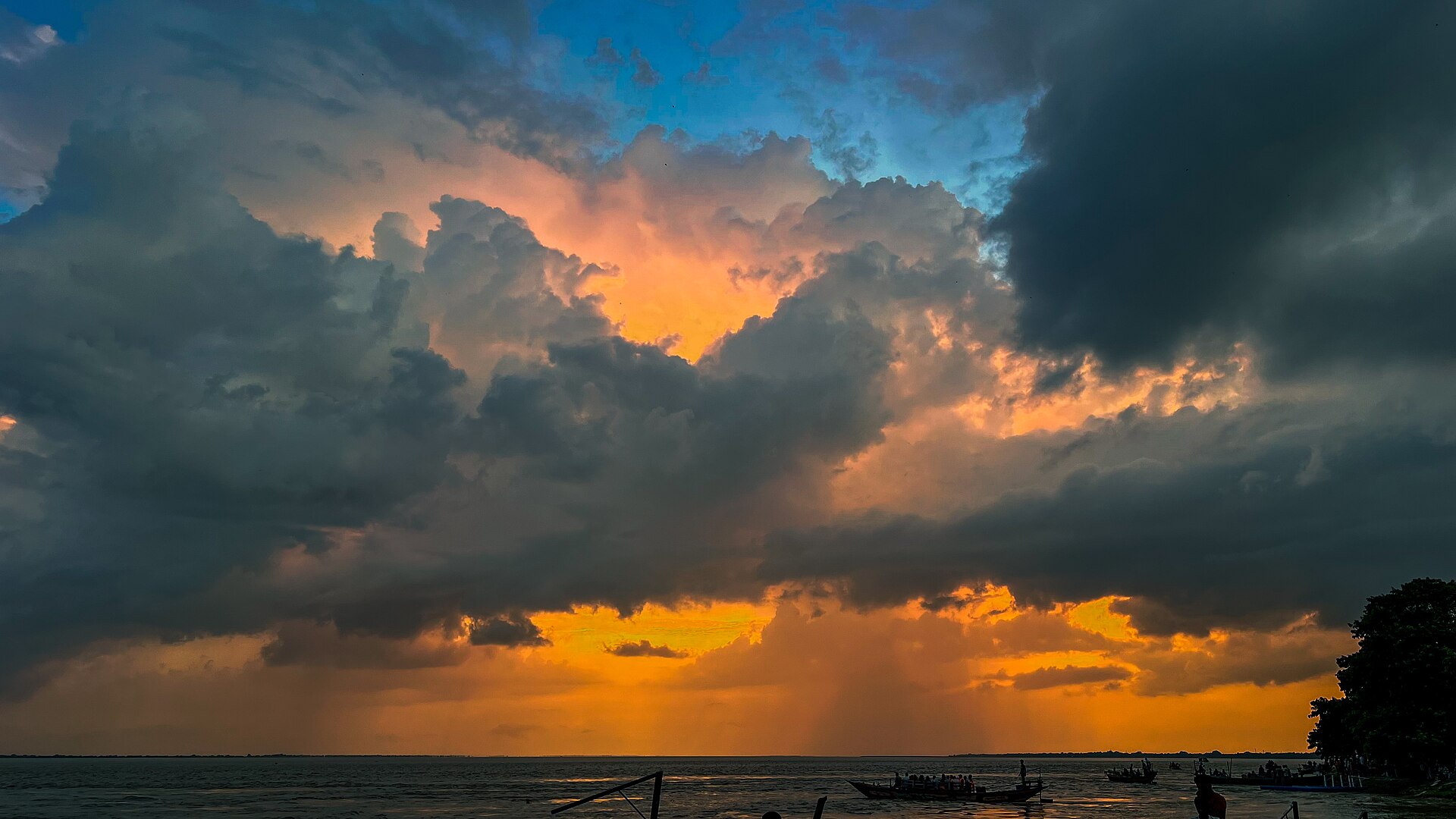
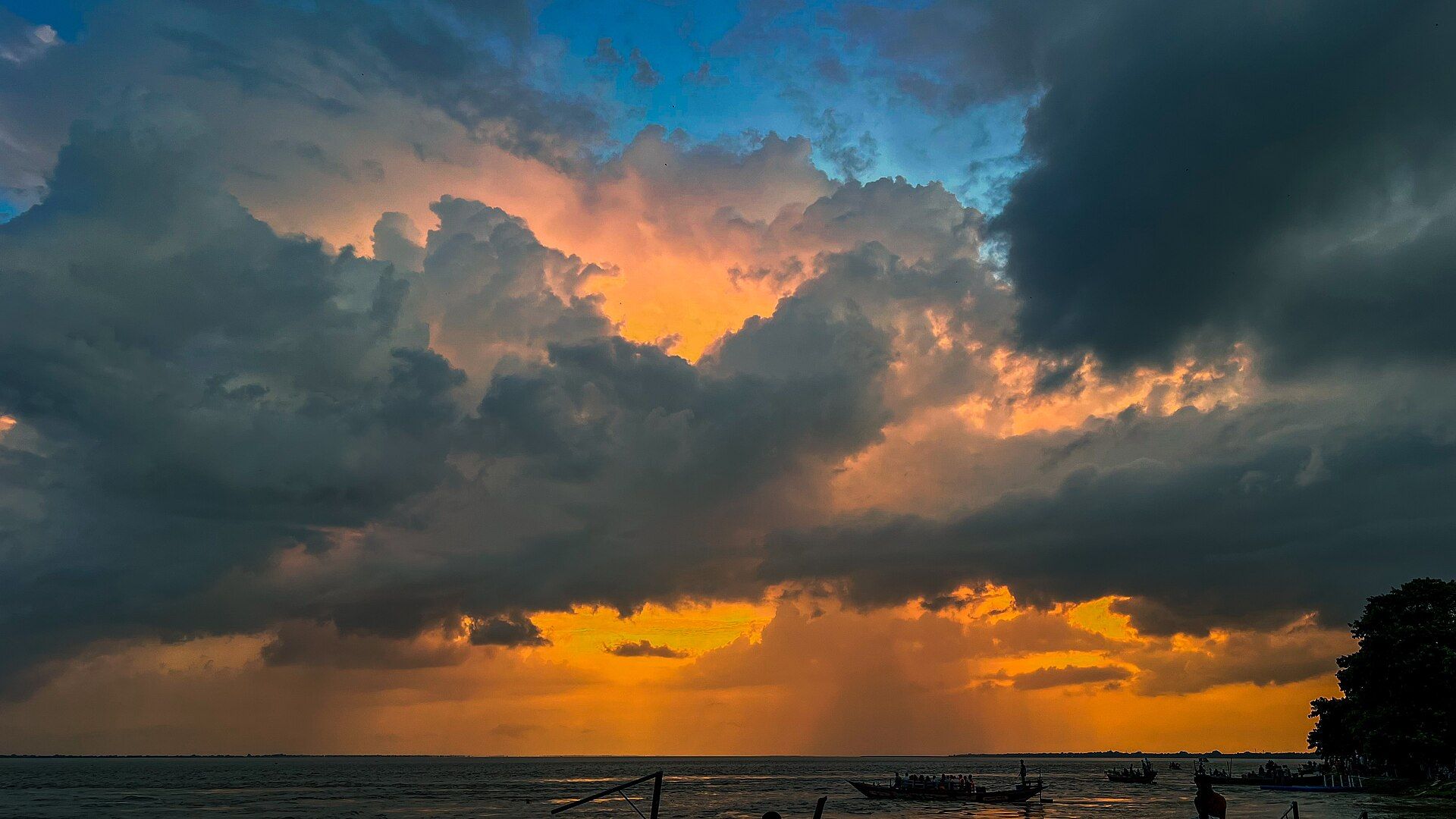
One licensed CC0 cloudscape at 1920 × 1080 was 238,301 bytes. With Keep original, 80% quality, and no resizing, Toolsila produced a 212,540-byte JPEG: 10.8% smaller at the same dimensions. Review focused on cloud edges, smooth color gradients, water, and the dark shoreline. This is one documented result, not a predicted saving for other images.

Reproducible evidence
Measured Toolsila compression, before and after
Source JPEG · 238,301 bytes
Toolsila result · 212,540 bytes
- Method
- Processed the attributed local source through the published Toolsila compressor and compared file metadata plus visible cloud edges, gradients, water, and shoreline detail.
- Settings or conditions
- browser-image-compression 2.0.2; Keep original JPEG; quality 80%; no resize; 1920 × 1080 input.
- Observed result
- The output remained 1920 × 1080 and measured 212,540 bytes, 25,761 bytes or 10.8% below the 238,301-byte source.
- Test or review date
- August 17, 2026
- Limitations
- One landscape cannot predict savings or perceived quality for portraits, screenshots, noisy photos, text, or files encoded by other software.
Inspect more than the headline saving
The percentage saved is calculated from file bytes. It does not score visual fidelity. A 70% saving can be excellent for one softly textured photo and unacceptable for another image containing fine typography. A negative or tiny saving is also possible if the source is already efficient or if the selected output format is poorly matched.
Compare at multiple zoom levels for different reasons. At the intended display size, ask whether a normal viewer will see anything distracting. At 100%, look for block patterns, mosquito-like ringing around edges, smeared texture, color shifts, and banding. Extreme zoom can help diagnose an artifact, but it should not become the only acceptance criterion for a small web image.
If the file will be printed or heavily cropped, inspect it under those conditions. If it is evidence, medical imagery, a master photograph, or another fidelity-critical asset, do not rely on a casual visual comparison; follow the domain’s preservation requirements.
Transparency changes the decision
JPEG cannot store alpha transparency. Selecting JPEG for a transparent PNG or WebP requires filling transparent pixels, and the Toolsila widget warns about that choice. A white fill may be correct for a product listing but wrong for a logo that will sit on several background colors.
For reusable cutouts, keep a transparent PNG master. Compress or flatten only a delivery copy. The transparent background guide explains why a checkerboard is only a preview and why soft edges need partial alpha values.
Lossy formats with alpha can still change color detail around the visible boundary. Test the result over light and dark surfaces, because a faint fringe may be invisible on one and obvious on the other.
Quality reduction versus resizing
These are separate operations. Quality adjustment changes how the existing pixel grid is encoded. Resizing changes the number of pixels. For an image displayed at a much smaller size than its source, reducing dimensions can often remove more bytes cleanly than forcing an extremely low quality setting.
Suppose a camera file is 6000 pixels wide but a site renders it at 1200. Encoding all 6000 pixels creates work and transfer cost that the page may never use. A well-resampled 1200-pixel variant at a sensible quality can look better in context than a severely compressed 6000-pixel file. Toolsila’s current compressor intentionally does not resize, so use a separate trusted resize step when the destination calls for it.
The guide to file size versus resolution separates dimensions, megapixels, metadata, and compression in more detail.
Avoid repeated lossy saves
Lossy compression is not a reversible dial. Opening the compressed file and saving it again does not return to the original representation before applying a new setting. Repeated generations can accumulate damage, especially around text and edges.
Maintain a simple structure: original, edited master, and delivery exports. Name the delivery file by purpose or dimensions. If requirements change, regenerate from the master rather than from the smallest available copy.
What result should you expect?
Expect experimentation, not a magic threshold. Begin around a moderate setting, compare honestly, and keep the version that passes your actual visual test. If lowering quality produces little benefit, the source may already be compressed, the content may be difficult, or another format may be more suitable. If reducing dimensions is allowed, treat that as a separate and often powerful choice.
You can compress an image with no visible problem for a specific use. You cannot responsibly promise that every smaller lossy file has “no quality loss.” The difference between those statements is the difference between a useful workflow and a marketing claim.
Sources and review notes
Editorial update: September 2, 2026. PNG’s lossless design is described by the W3C PNG specification; WebP modes are described by Google’s WebP documentation; JPEG and browser-facing format guidance are summarized by MDN. The update adds the visible measured example, its method, settings, source, result, and limitations; the test files themselves were produced on August 17, 2026.
Review before you export
- Open the candidate at its final display size and at 100% before discarding the master.
- Confirm that the destination accepts the chosen format and preserves needed transparency.